

Computer networks help in streamlining multiple business operations and personal usage.
Business operations that widely rely on computer networks include internet banking, e-commerce, stock exchange, digital marketing, etc.
Individuals use computer networks for communication, web conferencing, entertainment, online gaming, and more.
Computer networks are widely used with the advent of cellular computers and 5G technology.
Digital Networks, Software Engineering, and Integrated Circuits Design are some of the most interesting engineering specializations.
In this article, we will learn about the purpose of studying MTech Computer Networks.
MTech Computer Networks covers various topics such as:
- Computer Network Types
- OSI Layer
- Physical Layer
- Data Link Layer
- Network Layer
- Transport Layer
- Application Layer
- Network Security
M.Tech in Computer Networks Engineering
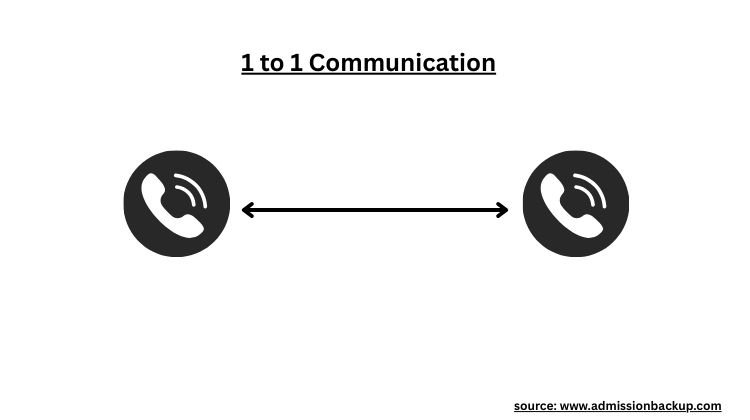
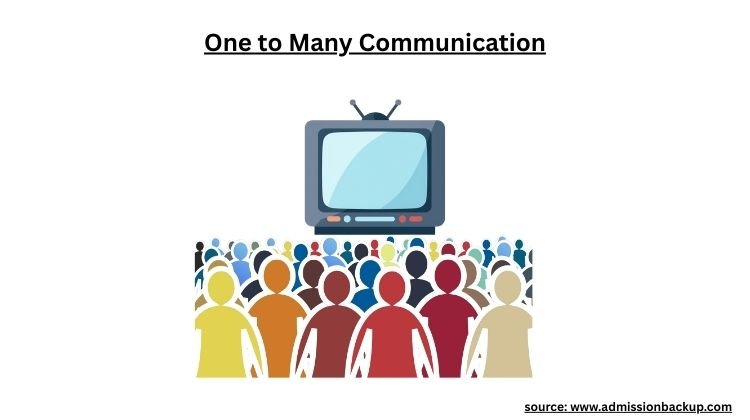
Computer networks are used for one-to-one and one-to-many communication.
One-to-one communication includes chat, voice, or video calls.
One-to-many communication examples include mass broadcasting using social media and e-commerce, where data is stored on servers and transmitted to client computers.
Computer networks can be classified into two categories based on usage: public and private.
Public computer network service providers include broadband companies, cellular networks (Vodafone), and satellite communication (SATCOM), which provide internet services.
Private computer network examples include intranets used by private organizations and universities.
The OSI Layer:
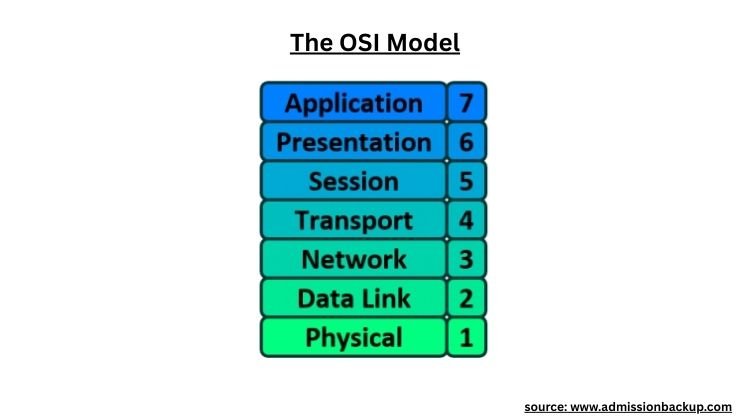
OSI Layer stands for Open Systems Interconnection, which has seven layers.
OSI layers perform specific functions using networking devices, which students must learn to operate to become a desktop support engineer (L1), network engineer (L2), network administrator (L3), or cybersecurity professional (L4).
A computer network can also be called Internet Protocol (IP) communication, as it uses IP addresses to communicate with other clients and servers in the network.
We lease IP addresses from the telecom service provider or Internet Service Provider (ISP) as long as we want to use them.
The servers and client devices are the proprietary of the purchaser of the device.
An arbitrator, such as government-appointed agencies, tracks the use of IP addresses and prevents the spread of misinformation.
The Physical Layer:
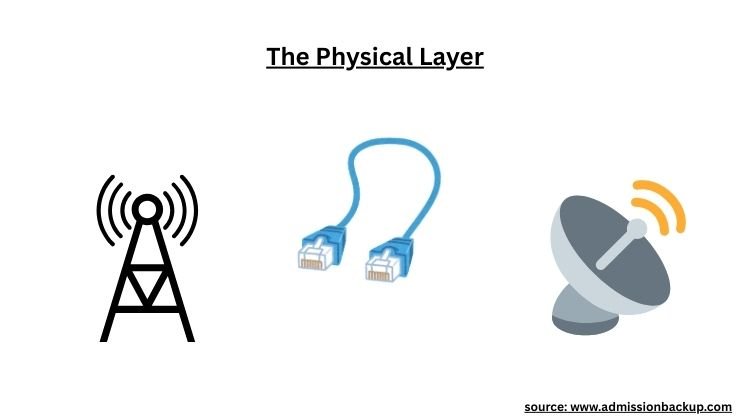
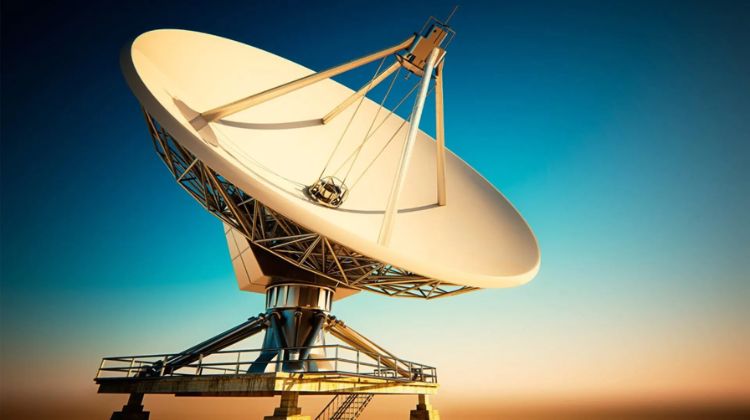
It is the layout of the transmission medium channel, which includes wired media (cables, optical fibers). Wireless media include radio waves (mobile towers, satellite antennas).
Optical fibers offer the fastest bandwidth and are the most reliable transmission medium for data.
Radio waves with greater wavelengths travel shorter distances but are cost-effective and efficient for transmitting signals to portable devices such as smartphones.
Professionals working at the physical layer include mobile tower technicians, fiber installation technicians, cable and satellite TV operators, etc.
Computer and telephone networks are more advanced, as they allow both upstream and downstream flow of data.
It forms a bidirectional communication channel.
Mobile towers and satellites send signals through a transmission medium using modulation and multiplexing techniques.
Data signals are encoded on a carrier signal.
IP packets are streams of data that contain the message, sender, and receiver address.
They are further classified into IP frames as packets move to the network layer.
The cellular industry is more flourished and has a larger subscriber base.
Thus, it has expanded to provide high-speed internet services using a network of optical fibers and high-bandwidth spectrum.
The Internet Service Provider (ISP) industry only offers data services to subscribers and pays a transit fee to Tier 1 and Tier 2 ISP providers.
Tier 1 ISP providers maintain a global network infrastructure (e.g., AT&T, Verizon), and Tier 2 ISP providers maintain a regional network infrastructure (e.g., Tata Communications).
The physical layer forms the backbone of computer networks and requires enormous expenditure to set up the networking infrastructure.
Computer networks benefit multiple industries and create employment across various sectors.
The Data Link Layer:
The Data Link Layer is the interface between the physical and network layers and plays an important role in network communication.
It transforms data packets into frames of data.
The Data frame contains the source and destination addresses, data, and parity bits.
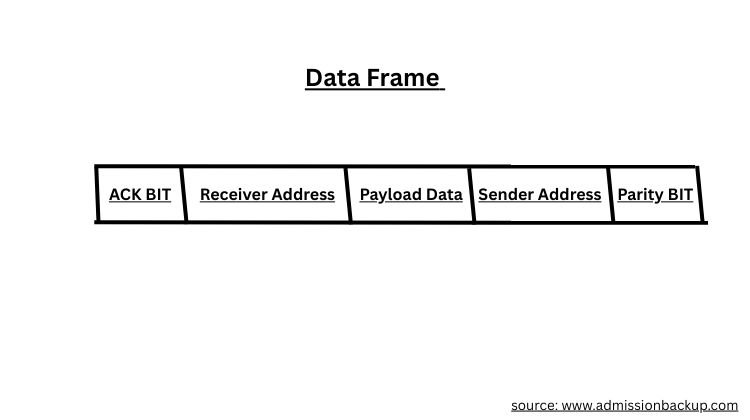
Parity bits are added using shift registers (transistors and flip-flops) to prevent errors.
As data frames propagate through wires and radio waves, they must be synchronized in a pattern so that they do not burst into each other and the signals are noise-free at the receiver end.
Error control ensures that data packets are not lost or damaged in the transmission process.
The source and destination addresses in network communication are the MAC addresses of the computer stored in the Network Interface Card.
Media Access Control (MAC) address is a unique serial number assigned to a Network Interface Card.
Network switches are used to add source and destination MAC addresses in optical fiber communication.
Similarly, in the Global System for Mobile Communication (GSM), SIM cards are used as source and destination addresses.
In cable TV transmission, RFID cards installed in set-top boxes perform the same function.
Computer networking switches are built by corporations such as Cisco, Juniper, Huawei, Hewlett Packard (HP), etc.
MTech Computer Networks involves the study of configuration and maintenance of networking switches.
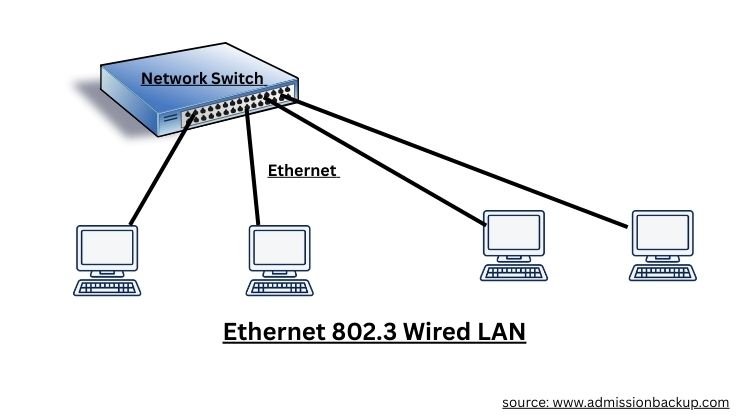
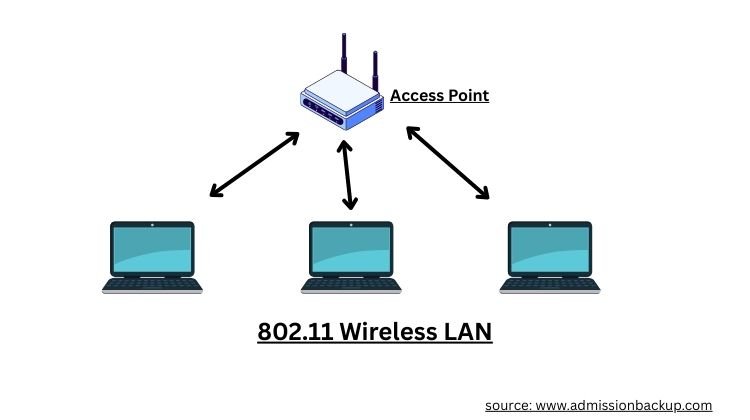
Network switches, Ethernet cables, Access points in offices, and ADSL routers (Wi-Fi routers) in homes assign IP addresses to computers in a network using their MAC addresses embedded in the Network Interface Card (NIC).
Network engineering teaches us to configure devices working at the data link layer.
The IEEE-defined protocols for network communication are 802.3 (Ethernet) and 802.11 (Wireless LAN).
Ethernet speed varies up to 10 Gbps and uses copper cables and optical fibers.
Network switches allow data transmission in full-duplex mode, and hubs (repeaters) operate in half-duplex mode.
Access points (APs) use the 802.11 protocol as the standard for wireless communication.
It uses 2.4 GHz and 5 GHz frequency bandwidths for data transmission in computer networks.
Network Layer:
The network layer uses the IP protocol for sending and receiving data packets using IP addresses.
IP addresses are of two types: Static IP and Dynamic IP.
Static IP remains the same as it is assigned by a network engineer to client devices in a network.
Dynamic IP address keeps changing and is allocated by DHCP servers.
Telecom operator or Internet Service Provider (ISP) allocates a dynamic IP address.
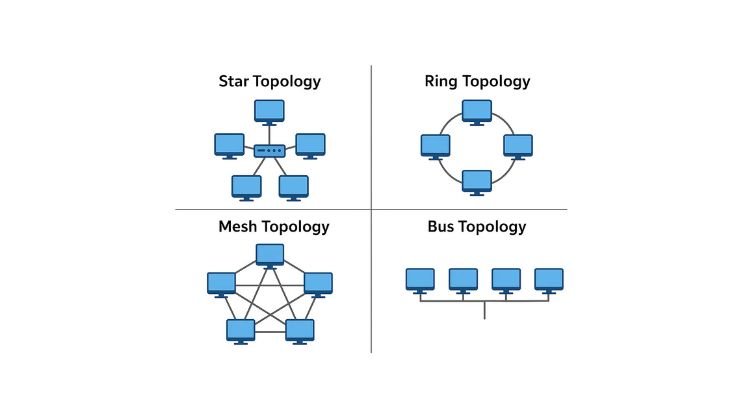
Star, ring, bus, and mesh are different types of network topology.
In ring and bus topology, if any node is not working (malfunctioning), the whole network goes down.
Mesh topology is used when more devices need to be connected in a network.
Also, it provides multiple paths for sending and receiving IP packets.
Network routers and switches are intelligent devices, as they have memory.
Hubs and repeaters are dumb devices used only for broadcasting over a channel.
MTECH Computer Networks teaches us the configuration of network routers.
A network router uses a routing table to maintain a list of IP addresses of different routers in a network, along with the distance between networks using hop count.
It broadcasts an IP packet in the network to know the IP addresses of other routers in the network along with their distance.
The IP address of a router is known as the default gateway of all client devices in a network.
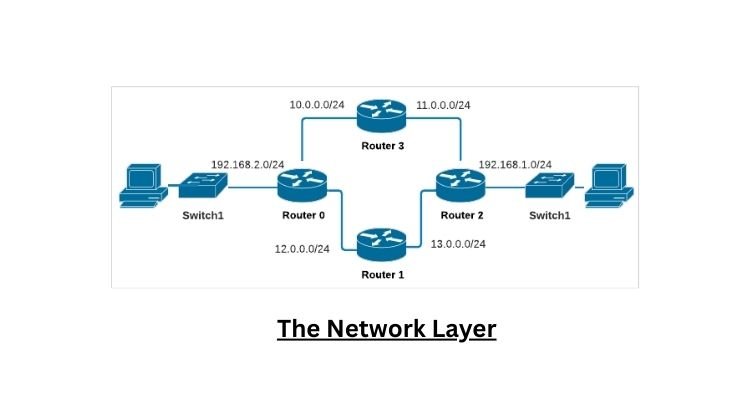
At the network layer, data frames are further fragmented into IP packets, known as IP fragmentation.
Data frames at the data link layer are further encapsulated with sender and receiver IP addresses, Time to Live (TTL), checksum, etc., in the header of IP packets.
The IP protocol is the standard for the modern Internet.
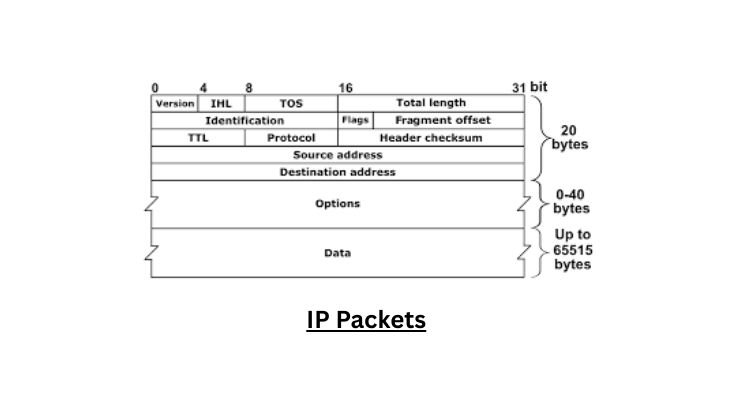
An IP address is a unique identifying number of any device in a computer network.
IPv4 and IPv6 are the two versions of IP addresses.
IPv4 is a 32-bit address written in decimal format (0–255) separated by dots.
IPv6 is a 128-bit address written in hexadecimal format separated by colons.
IPv6 address is mostly used in home networks assigned by telecom operators, and IPv4 is assigned by ISP providers, commonly used in office environments.

Transport Layer:
The transport layer is the most important layer, as it defines how hosts communicate in a computer network.
Transport layer uses the operating system (OS), such as UNIX or Linux, to define network sockets or ports.
Network sockets are used to establish a two-way connection between two hosts (sender and receiver).
The sender sends a connection request to the receiver; in turn, the receiver sends an acknowledgement receipt, and data is transferred. Later, the connection is terminated once the data is transferred.
Transport layer uses the Transmission Control Protocol (TCP) and the User Datagram Protocol (UDP) to send and receive data packets.
TCP protocol establishes a three-way handshake to send files, whereas UDP is used to transmit voice and video data and is a connection-less protocol.
TCP communicates over various ports, such as:
- FTP: Port 20
- Mail Server: Port 25
- HTTP: Port 80
- HTTPS: Port 443
User Datagram Protocol (UDP) is a fast, connectionless protocol used by streaming and gaming applications.
The transport layer lays the foundation of the World Wide Web (WWW).
Sir Tim Berners-Lee invented the World Wide Web by making the first connection between a host and a server using the Hypertext Transfer Protocol (HTTP).
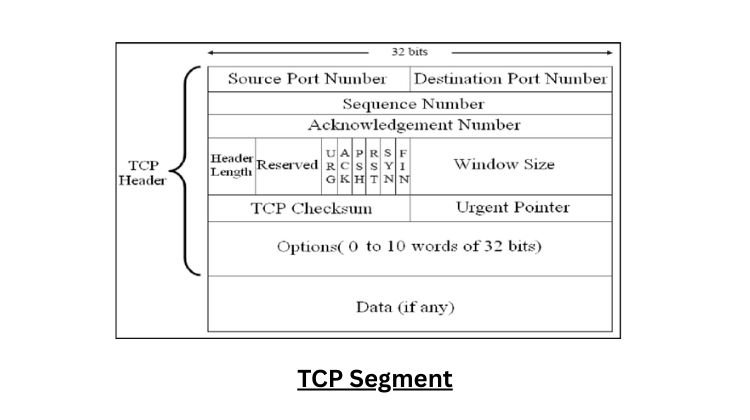
Transport layer further breaks down the IP packets received from the network layer into TCP segments.
TCP segments consist of the source and destination port numbers, sequence number and acknowledgement bits, and data packets.
Sequence number bits are used to transmit data in the correct sequence and allow buffering of data packets at the receiver end.
Acknowledgement bits are used to send a confirmation of data received between the sender and the receiver.
Application Layer:
The application layer is the topmost level of the OSI Model, which includes email, websites, audio and video streaming applications, and content delivery networks.
This layer uses the Domain Name System (DNS) protocol to resolve IP addresses with their domain names.
A domain name has various extensions such as .org, .com, .in, .co, etc.
A Fully Qualified Domain Name (FQDN) is the complete web address of an application, such as www.example.com.
Hosting a web application on a server requires an FQDN issued by a domain registrar and a hosting provider, which provides a nameserver and keeps all DNS records.
A Nameserver keeps all DNS records and fetches the IP address of the web application when requested by a client device.
A DNS editor includes various records such as:
- A: IPv4 address of a host
- AAAA: IPv6 address of a host
- MX: Mail Exchange
- NS: Name Server
- CNAME: Alias (www)
- TXT: Text
DNS resolution helps users remember a friendly name rather than the IP address of a web application.
Modern Internet applications are built using programming languages and cloud computing.
Cloud computing streamlines multiple IT operations and offers various job roles such as cloud administrator and DevOps engineer for MTech Computer Network Engineering graduates.
Network Security:
Large corporations as well as SMEs prefer modern technologies such as the Internet and software applications for their daily operations.
This makes it easier for scammers and hackers to target businesses to steal their data, hack web servers, ask for ransom, and carry out various other illicit activities.
Many companies are victims of cyberattacks and are vulnerable to cybercrime.
Thus, they employ network security engineers to protect the network, client data, and other confidential information stored on servers.
Cyber scammers try to inject malicious scripts (worms and viruses) into servers.
TCP snooping means sending fake acknowledgment packets and trying to establish a connection with servers.
Distributed Denial of Service (DDoS) is another kind of attack that overwhelms a server by flooding it with acknowledgment packets using bots trying to establish connections, thus disrupting the service.
Web application firewalls (WAFs) and network firewalls provide security against cyberattacks.
A Web Application Firewall (WAF) acts as a proxy server.
It hides the actual IP address of the server and sits between client computers and servers, providing protection at the application layer.
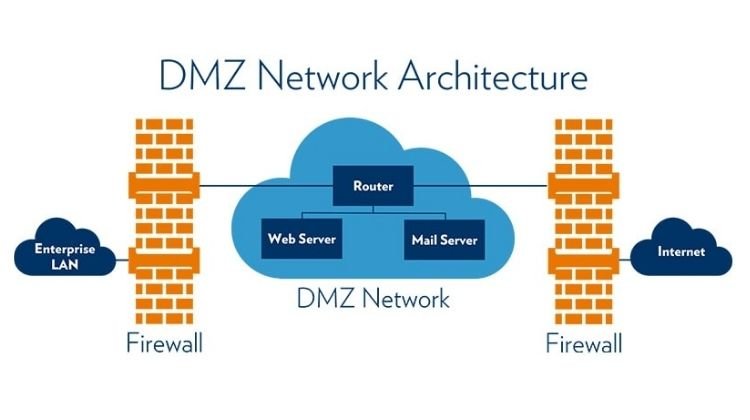
A network firewall such as Fortinet creates a demilitarized zone, acting as a wall and bridge.
It protects the mail server and web server from the internal network, as well as from clients trying to access the servers through the Internet.
MTech Computer Networks Admission Process
Students with a bachelor’s degree in computer science engineering can pursue an M.Tech in Computer Networks Engineering.
They must also have a valid score in the Graduate Aptitude Test in Engineering (GATE) or appear for state-level entrance tests such as Karnataka PGCET, etc.
Top colleges in Bangalore offering M.Tech in Computer Network Engineering:
- RV College of Engineering
- Manipal Academy of Higher Education
- BMS College of Engineering
- Ramaiah Institute of Technology
Students with backgrounds in other engineering specializations can also pursue a career in networking.
Many online platforms offer courses in computer networking.
Employment opportunities for MTech Computer Networks graduates:
- Cellular companies
- Broadband service providers
- Networking equipment manufacturers
Many businesses also employ desktop support engineers and network security engineers to set up and maintain networking infrastructure and provide internet access to employees, etc.
Top corporations hiring network engineers:
- Cisco
- Nokia
- Ericsson
- Qualcomm
- Palo Alto Networks
- Juniper Networks
- Aruba Networks
Conclusion:
High-speed optical fiber communication offered by Internet Service Providers is essential for medium- and large-sized businesses.
Most retail consumers prefer cellular networks for communication and data services.
Radio waves have a limited spectrum, and spectrum allocation is a tedious process, as there are many broadcasters.
Computer networks play an important role, as they allow thousands of broadcasters to upstream (upload) music, audio, and video data to servers for various streaming channels.
Network engineers are employed by broadband vendors, cellular companies, networking equipment manufacturers & business organisations.
An M.Tech in Computer Networks Engineering opens the door to many challenging and higher-paying job roles for young graduates.
For career consultation, please contact our helpline at +91 8546881677.



World Encyclopedia
A Kids’ Dictionary