Transistors have changed the way humans communicate and express themselves.
Computers, smartphones, televisions, LED display boards, and many other commonly used electronic devices are made of semiconductor components.
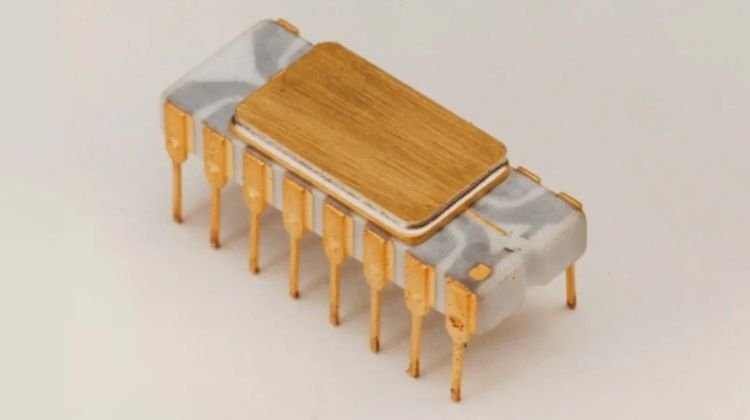
A single unit of a transistor is called an NMOS or PMOS transistor, whereas an integrated circuit or a microchip contains many transistors fused together on a silicon wafer.
Transistors were developed in the mid-20th century, and semiconductor manufacturing is a billion-dollar industry.
Texas Instruments, Intel, and American Telephone & Telegraph (AT&T) are some of the pioneer companies that led the semiconductor manufacturing industry.
Very Large Scale Integration (VLSI) is the process of creating microchips by combining millions or billions of transistors together.
In this article, we will learn about the purpose of studying MTech VLSI Design & Embedded Systems.
MTech VLSI Design & Embedded Systems
MTech VLSI Design & Embedded Systems is a two-year, full-time program offered by engineering colleges.
Students with a bachelor’s degree in Electrical or Electronics and Communication Engineering can pursue this course.
Additionally, the basics of VLSI Design and Embedded Systems are part of the curriculum in undergraduate engineering programs.
M.Tech. in VLSI Design & Embedded Systems covers various topics such as:
- Transistor Design
- MOS Transistor Theory
- CMOS Processing Technology
- Logic Delay
- Power
- Robustness
- Circuit Simulation
- CMOS Circuit Types
- Data Path Subsystem
- Memory Arrays
- Special Purpose Subsystem
- Design Methodology
Transistor Design:
Transistors can be defined as the basic cells of a microchip.
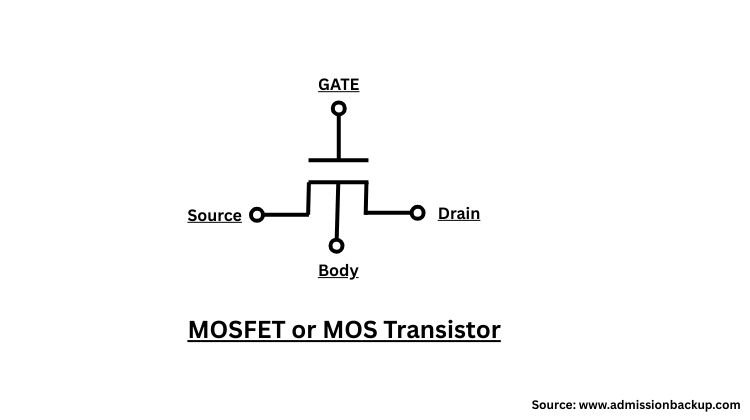
Metal Oxide Field Effect Transistors (MOSFETs), also known as MOS transistors or Field Effect Transistors (FETs), are voltage-controlled switches.
They are of two types: NMOS and PMOS, or N-channel MOSFETs and P-channel MOSFETs, which are used to build logic circuits such as AND, OR, NOT, NAND, and NOR gates.
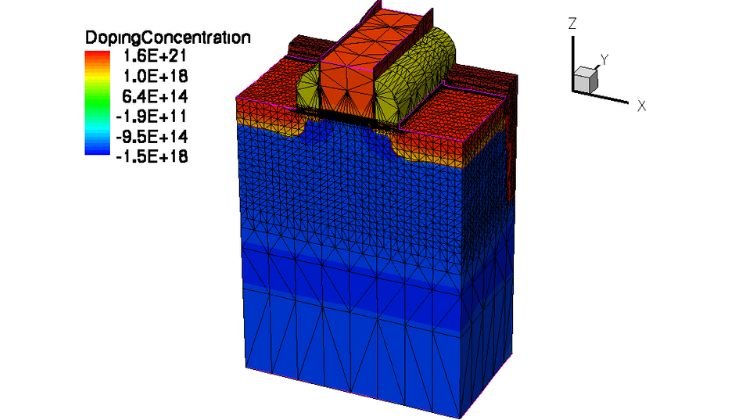
Transistors are fabricated by doping silicon (Si) atoms with phosphorus and boron atoms.
N-type and P-type MOS transistors are created by converting their physical behavior using doping techniques, thereby generating positively charged holes and negatively charged electrons.
The structure and behavior of a transistor are defined using hardware description languages, namely Verilog and VHDL.
The structure defines the composition of logic gates formed using transistors, while behavior specifies what a transistor cell does.
MOS Transistor Theory:
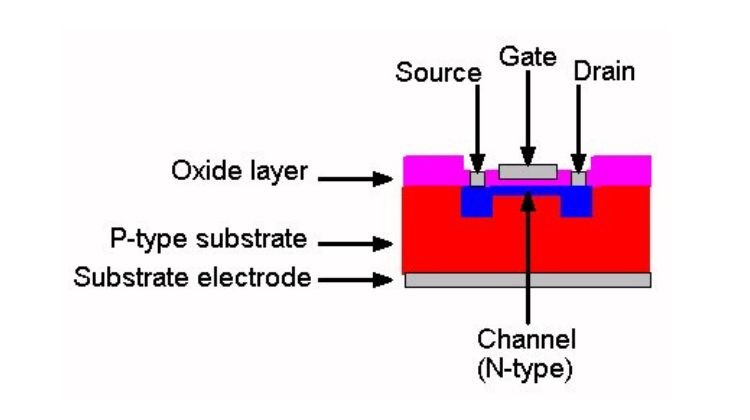
A MOS transistor includes the body, source, and drain.
The transistor body is also known as the gate, which acts as a capacitor made of silicon separated by a dielectric material of silicon dioxide (SiO₂).
The bottom end of the body forms the channel, which connects to form either a P-channel or N-channel transistor (PMOS or NMOS).
A capacitor accumulates positive charge on one end and negative charge on the other end.
N-channel MOSFET includes electrons; thus, current flows from source to drain through the gate channel, forming the pull-up network because like charges repel each other.
P-channel MOSFET includes positively charged holes, and relatively less current flows from source to drain through the gate channel, forming the pull-down network because unlike charges attract each other.
The pull-up network is formed by NMOS transistors and returns a logic 1, while the pull-down network is formed by PMOS transistors and returns a logic 0 based on current flow.
Thus, transistors perform various logical operations and form logic gates.
CMOS Processing Technology:
Complementary Metal Oxide Semiconductor (CMOS) devices are fabricated using the processes of oxidation and ionization.
The basic raw material used in CMOS fabrication is silicon, which is a semiconductor.
Through the process of oxidation, silicon wafers are converted into silicon dioxide (SiO₂).
Silicon dioxide (SiO₂) is dielectric in nature and acts as an insulator.
SiO₂ is used in CMOS fabrication because it can be easily grown, and its properties can be modified through the process of ionization.
Ionization is the process of adding dopants to a neutral atom to make it an electrically charged ion by gaining or losing one or more electrons, thereby becoming positively charged (losing electrons) or negatively charged (gaining electrons).
This process creates P-channel holes (PMOS) and N-channel electrons (NMOS) in a silicon dioxide wafer.
Logic Delay Estimation in Transistors:
Transistors are modeled as a resistance–capacitance (RC) circuit.
Digital circuits exhibit nonlinear current and voltage behavior due to constant capacitance and effective resistance when the transistor is ON.
Power:
Nanotechnology-based devices, including transistors, require power to operate, which is supplied by a battery or an AC/DC source.
A significant portion of the power in transistors is dissipated during the charging and discharging of capacitors.
Microprocessor power is consumed by clock frequency, memory, and input/output devices.
Clock frequency can be defined as the energy required to complete a workload within a specified time, such as rapidly changing scenes in a video.
Memories are crucial storage blocks (RAM, ROM, and flash storage such as SSDs) used to store data that can be processed by microprocessors.
Input and output (I/O) devices include keyboards, mice, microphones, display screens, webcams, etc.
Robustness of Transistors:
The robustness of a transistor determines its life expectancy under varying temperature and voltage conditions.
Transistors undergo wear and tear as silicon dioxide (SiO₂) bond breakage occurs due to high temperature and voltage, which affects the processing speed of a microprocessor.
Transistors can be scaled down to thicknesses of only a few atoms.
Thus, millions or even billions of transistors can be integrated into a single microchip.
Circuit Simulation:
Circuit simulation is a computer-based process used to compute resistance, capacitance, threshold voltage, and leakage current in a transistor using SPICE simulation software and other CAD tools.
It is useful for designing transistors.
CMOS Circuit Types:
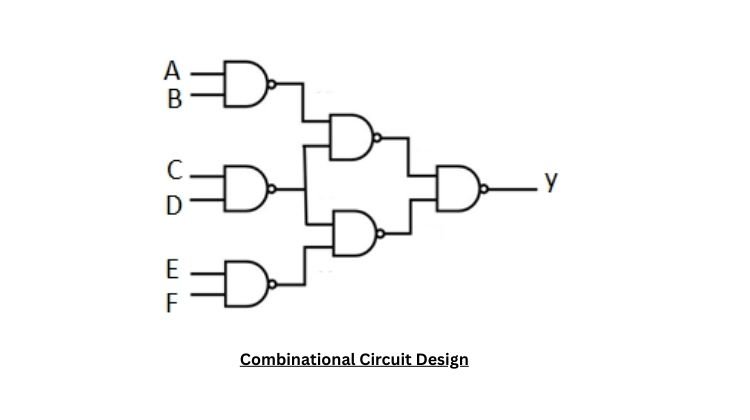
CMOS circuits include combinational and sequential circuits.
The output of combinational circuits depends on the present input, while sequential circuits have their own memory, such as registers and flip-flops.
Combinational circuits are a cascade of multiple logic gates (AND, OR, NOR, NAND gates) and are more robust.
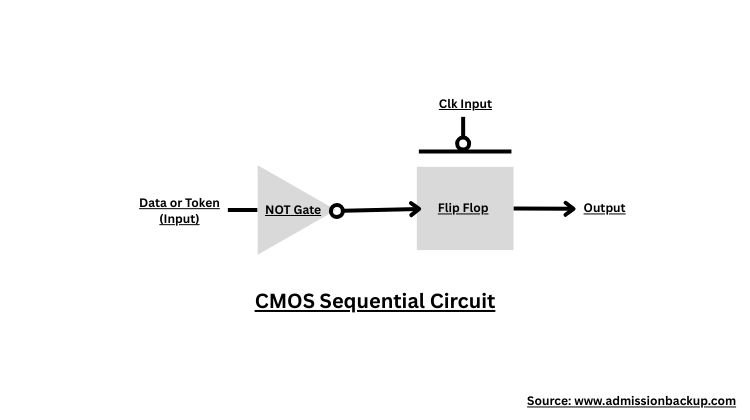
Sequential circuits are formed by cascading combinational circuits with latches or flip-flops.
To avoid data or token overlapping in the computation process, latches have a clock input and a token input to produce an output.
The next token in a circuit arrives at the rising clock edge, thus forming CMOS sequential circuits.
Sequential circuits are also helpful in creating finite state machines using memory elements.
A latch becomes transparent when the clock is high and becomes opaque when the clock is low.
Thus, latches and flip-flops act as memory elements.
Typical examples include video streaming applications, where we can resume watching content from where it was previously left, or saving progress in online gaming due to memory elements.
Data Path Subsystem:
The Data Path Subsystem includes adders, comparators, counters, and various other circuit elements.
Adders are useful in synthesizing 32-bit and 64-bit microprocessors, working on the principle of analytical computing.
Comparators compare the magnitude (=, <, >, etc.) of two binary numbers.
Counters count the value of data or tokens using clock frequency (CLK input) to perform various operations such as reset, load, enable, reverse, etc.
Sir Charles Babbage’s early mechanical analytical engine concept was used to build modern computing engines.
Memory Array:
Memory arrays are CMOS circuits that include RAM, ROM, shift registers, etc.
Random Access Memory (RAM) and Read-Only Memory (ROM), along with their various types, are commonly used to perform logical functions such as storing instructions and their addresses.
Special Purpose Subsystem:
The Special Purpose Subsystem includes the power distribution network, clocking subsystem, and input/output signals.
Their function is to protect CMOS circuits from heat, voltage, and electrostatic charge, and to provide clock input signals, etc.
Design Methodology:
CMOS circuit design is a combination of structural, physical, and behavioral domains.
The hardware defines the structural domain, the physical domain is defined by functionality and abstraction, and software defines the behavioral domain.
Tools such as Computer-Aided Design (CAD) are widely used in CMOS circuit design.
Hardware Description Languages (VHDL, Verilog) allow us to map gates and registers to specific transistor cells.
MTECH VLSI & Embedded Systems Admission Process
To pursue an M.Tech in VLSI & Embedded Systems, students must have an undergraduate degree in Electrical or Electronics Engineering.
Additionally, students must qualify in the GATE exam or a state-level entrance exam such as Karnataka PGCET.
Top Colleges Offering M.Tech. in VLSI Design & Embedded Systems:
- RV College of Engineering
- MS Ramaiah Institute of Technology
- BNM Institute of Technology
- Alliance University
- REVA University
Top Companies That Offer Employment to M.Tech. in VLSI Design & Embedded Systems Graduates:
- Samsung Electronics
- IBM
- Intel
- Texas Instruments
- TSMC
- NVIDIA
- Qualcomm
- AT&T
Conclusion:
In the age of digital communication, transistors play an important role in manufacturing affordable, compatible, durable, and energy-efficient electronic devices.
Transistors perform logical operations in computers and other electronic devices, such as calculation, comparison, program control flow, and data manipulation, using Boolean logic (True/False, 1/0), primarily through logic gates.
Smart electronic equipment is built using transistors.
Cathode ray tubes consume more power and are bulky compared to semiconductor devices such as diodes and transistors.
Transistors are widely used in electronic appliances such as computers, smartphones, digital watches, Android televisions, TV remotes, air conditioners, washing machines, digital display boards, ATM machines, automobiles, etc.
The M.Tech. in VLSI Design & Embedded Systems course helps students gain employment in the semiconductor and electronics manufacturing industries.
For career consultation, please contact our helpline at +91 8546881677.